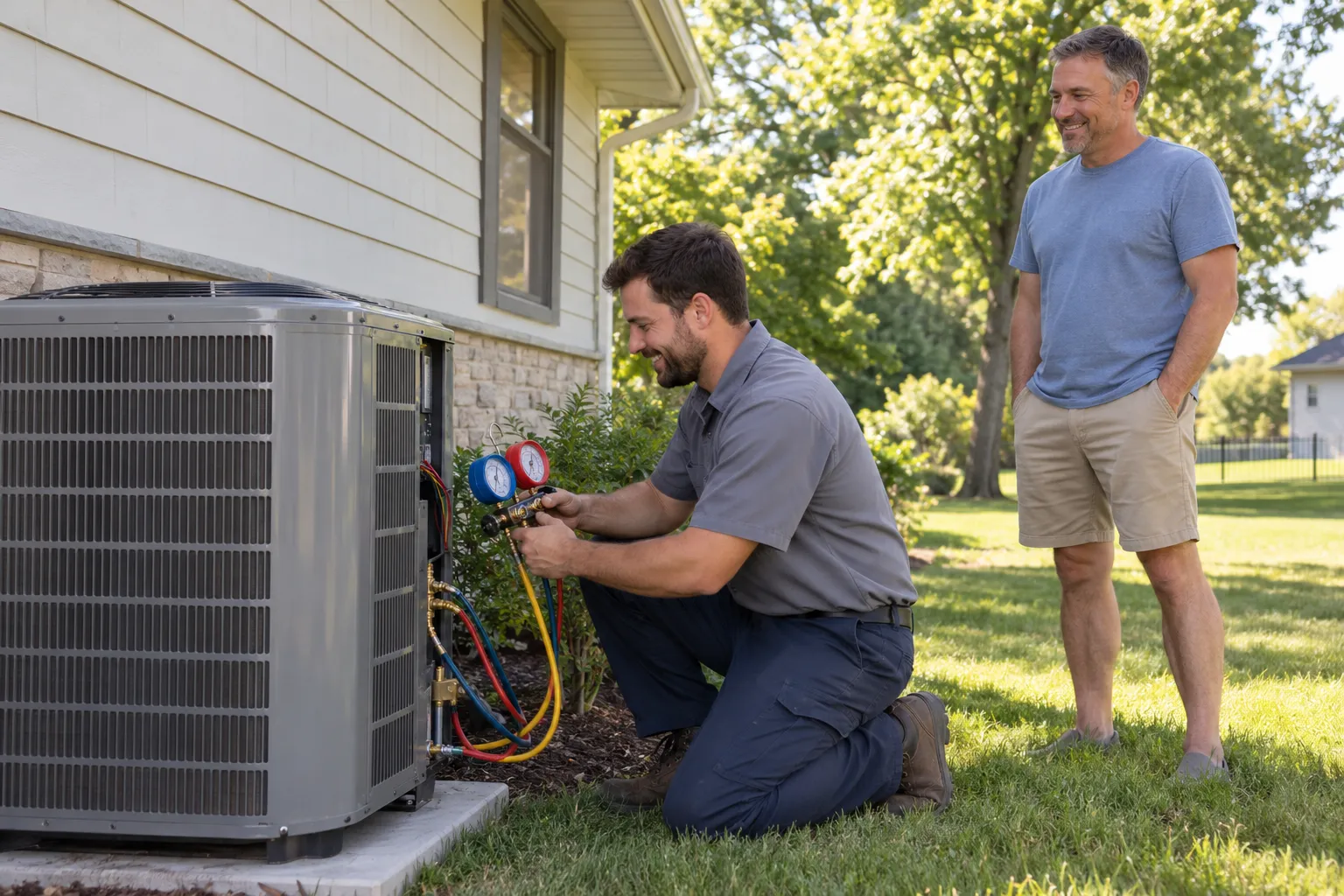
A warm house in a humid summer is hard to ignore. Bedrooms get stuffy, sleep gets worse, and food in the kitchen warms up. The cause is often small. It might be a dirty filter, a tripped breaker, or a worn part that costs little to replace.
Governmentsinging Heating & Air is a referral service. We connect homeowners across the Raymore area with independent providers in our network who do AC repair. We do not do the work ourselves. This page walks you through safe first steps, common problems, what a visit looks like, and the questions to ask. You can compare estimates at your own pace, with no obligation, and then plan simple upkeep so the problem does not return.
AC Stopped Cooling? Start Here
Stay calm. Most AC problems are not dangerous, but a few can be. Take two minutes for the basics before you reach for any tools.
Do These Things First
- Make sure the thermostat is set to cool and the target is below the room temperature.
- Check the breaker panel. If the AC breaker tripped, reset it once.
- Look at the air filter. A clogged one chokes airflow and can freeze the coil.
- Clear leaves, grass and debris from around the outdoor unit.
Do Not Do These Things
- Do not open the electrical panel on the outdoor unit.
- Do not keep resetting a breaker that trips again.
- Do not run a unit that is covered in ice.
- Do not run the system if you smell burning or see sparks.
When to Shut It Off
Turn the system off at the thermostat and the breaker if you notice burning smells, loud grinding, water near electrical parts, or ice on the lines. Running a damaged system can turn a small repair into a large one.
Signs Your AC Needs Repair
Some signs are loud. Others creep in over a few weeks. Either way, they are worth taking seriously.
Warm Air From the Vents
If the fan runs but the air feels warm, the problem could be low refrigerant, a failed capacitor, or a compressor issue. A provider can tell which.
Strange Sounds and Smells
Buzzing, clicking, squealing and rattling each point to different parts. A musty smell may mean moisture in the ducts. A hot, electrical smell means shut it off.
Short Cycling and Rising Bills
An AC that starts and stops every few minutes is under strain. So is one that runs all day and still cannot keep up. Your power bill may be the first clue.
Ice, Leaks and Damp Spots
Frost on the indoor coil or lines, or water around the indoor unit, usually points to airflow or drain trouble. Turn the system off and let the ice melt before any visit.
Storms, Heat and Flooding
Hot, humid summers push an AC hard. Thunderstorms and hail can dent fins and cause power surges that damage the controls. If spring flooding reached your outdoor unit or basement equipment, keep the power off and do not restart it until a provider has checked it. Some policies may cover sudden damage, so check your policy, and providers can often help document damage for a claim.
What Happens During a Repair Visit
Knowing the steps helps you stay in control of the job.
Check and Diagnosis
The provider looks at the thermostat, filter, electrical parts, refrigerant lines, coils and drain. Many providers can respond quickly, and Request a callback to check provider availability in your area.
A Written Quote Before Work
Ask for the cause, the fix and the price in writing. You are not required to say yes on the spot.
The Repair Itself
Small parts are often replaced during the same visit. Larger parts may need to be ordered, so ask about timing.
Common AC Repairs
- Replacing a failed capacitor or contactor
- Repairing a refrigerant leak and recharging the system
- Swapping a worn fan motor
- Clearing a clogged condensate drain
- Cleaning a dirty or frozen coil
- Replacing a failed compressor
Repair or Replace?
A repair makes sense when the system is fairly young and the fix is small. Replacement deserves a closer look when the unit is old, repairs keep stacking up, or the part that failed is costly. Ask the provider to explain both paths in plain words. Do not feel rushed into either one.
Compare Before You Commit
Two estimates can describe the same fix in very different ways. Put them side by side and look at the cause, the parts, the warranty on parts, and the total price. A big gap is a reason to ask questions, not to panic.
Questions to Ask the Provider
- What caused the failure, and can you show me?
- Is the quote written, with parts and labor listed?
- Is the part new, and does it carry a warranty?
- Could this problem return soon?
- Is there a fee for the diagnostic visit?
Fix It, Then Protect It
A repair solves today's problem. Upkeep helps prevent the next one.
After the Repair
- Replace the filter on the schedule the provider suggests.
- Keep two feet of clear space around the outdoor unit.
- Rinse light dust off the outdoor coil with a gentle spray.
- Pour nothing into the condensate drain unless the provider advises it.
Before Each Summer
Book a tune-up in spring, before the first heat wave. A provider can check refrigerant, electrical parts and the drain while the weather is mild. After hail or a big storm, ask for a quick look at the outdoor unit too.
What's Included
Cooling Diagnosis
A provider checks the thermostat, filter, electrical parts, coils and refrigerant to find the real cause.
Part Replacement
Worn capacitors, motors and relays are swapped out for working parts.
Drain and Coil Care
Clogged drains and dirty coils are cleared to restore airflow and stop leaks.
Written Repair Quote
You get the cause, the fix and the price in writing before any work starts.
Typical AC Repair Costs
Prices vary by home, system age, part and region. These are typical U.S. ranges only, not quotes. Always ask for a written quote that lists parts and labor before you agree to any work.
| Repair item | Typical range | Notes |
|---|---|---|
| Diagnostic visit | $75 – $200 | Sometimes applied toward the repair if you proceed |
| Capacitor or contactor | $120 – $450 | Common, small electrical part |
| Condensate drain clearing | $100 – $300 | Stops leaks and water shutoffs |
| Fan motor replacement | $300 – $900 | Depends on indoor or outdoor motor |
| Refrigerant leak repair and recharge | $200 – $1,500 | Varies with leak location and refrigerant type |
| Compressor replacement | $1,200 – $3,500 | Ask about replacing the whole unit |
How It Works
Check the Basics
Look at the thermostat, breaker and filter. Turn the system off if you notice burning smells or ice.
Request an Estimate
Tell us about the problem and a local provider in our network reaches out.
Compare Quotes
Review the cause, parts and price in writing before choosing.
Repair and Maintain
Get the work done, then follow the upkeep advice.
Why Call Governmentsinging Heating & Air
Safety First
Clear do and do not advice helps you avoid electrical risks and damage to the system while you wait.
Compare Options
Review more than one estimate and decide at your own pace, with no obligation.
Independent Providers
The work is done by independent providers in our network, never by Governmentsinging Heating & Air.
Lasting Fixes
Simple upkeep tips help keep the same problem from coming back.
Other Services
Need ac repair in Raymore?
Tell us what your heating or cooling system is doing. Send a request and a local provider can follow up with a written quote. No obligation.
No obligationAC Repair FAQ
Why is my AC running but not cooling the house?
Common causes include a dirty filter, low refrigerant, a failed capacitor or a frozen coil. Check the filter and thermostat first. If air is still warm, turn the system off and request an estimate.
Is it safe to reset my AC breaker?
One reset is usually fine. If the breaker trips again, leave it off. Repeated tripping suggests an electrical fault or failing part, and it needs a provider's attention.
How much does an AC repair usually cost?
Many repairs fall between about $100 and $1,500 in the U.S., depending on the part and the labor. Compressor work costs more. Always get a written quote before agreeing to the job.
Reach a local provider
Tell us what your heating or cooling system is doing. Send a request and a local provider can follow up with a written quote. No obligation.
No obligation