AC Installation and Replacement for Your Home
Compare local AC replacement estimates
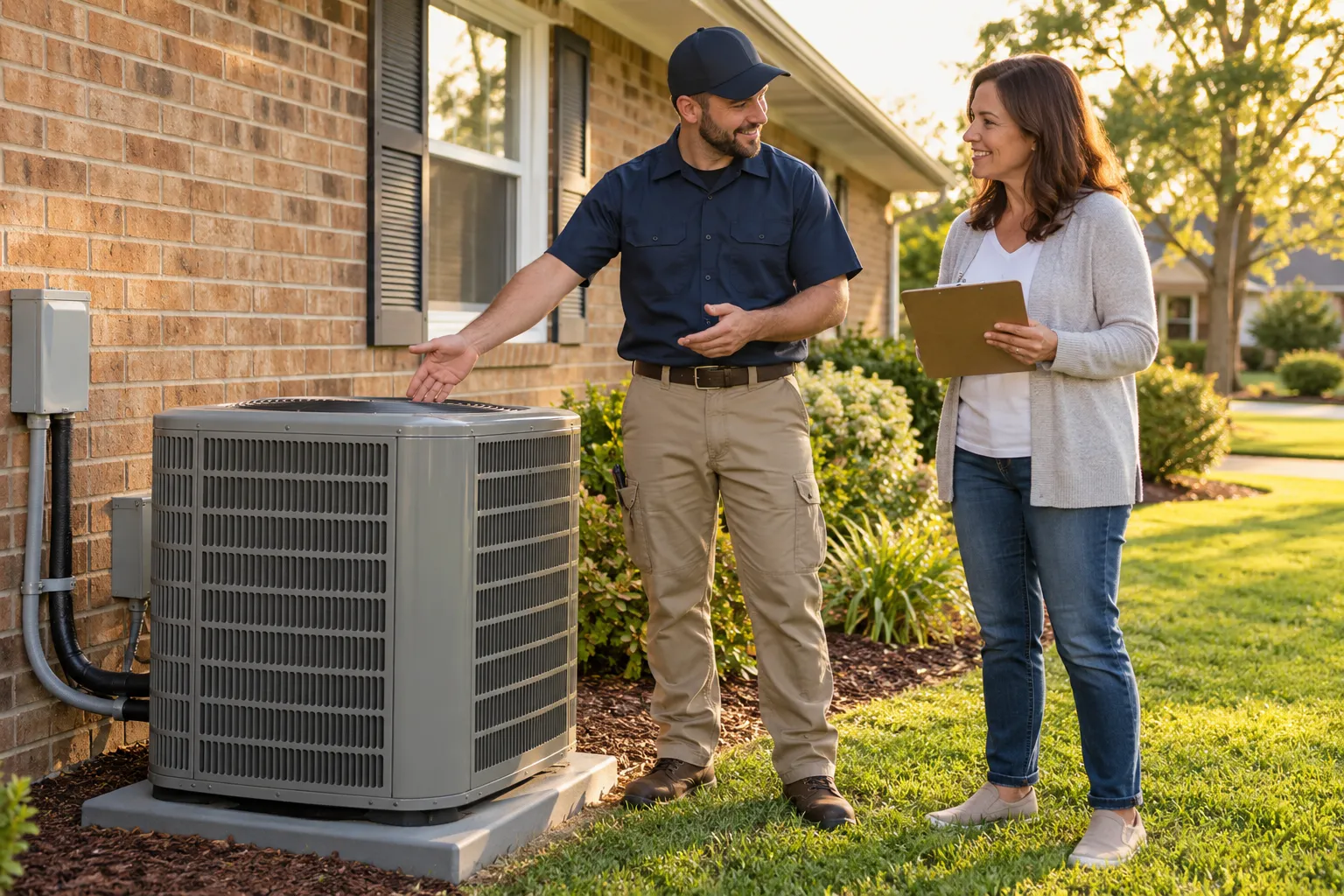
Hot, humid summers are hard on cooling systems. Add severe storms, hail, and spring flooding, and an older air conditioner can wear out faster than you expect. When repairs pile up, a new system may be the calmer and safer choice.
Governmentsinging Heating & Air is a referral service. We connect homeowners in the Raymore area with independent providers in our network who handle the sizing, removal, and installation. You can compare written estimates side by side, ask questions, and decide at your own pace. There is no obligation. This page explains the warning signs, the system types, what a proper install includes, and how to care for the new unit so it lasts.
Is it time for a new AC?
A cooling system that quits in a hot, humid stretch is stressful. Stay calm. You usually have a little room to decide well.
Start with one question. Is this a repair, or is this the end of the unit? A first-time failure on a newer system often points to repair. An old system with repeat failures is a good time to price a replacement. If the house is unsafe or too hot right now, Request a callback to check provider availability for emergency AC repair. Then make the bigger decision once everyone is comfortable.
Signs your AC may be past repair
Look for a pattern, not a single bad day. These signs often add up:
- The system is more than 12 to 15 years old.
- Repair bills keep coming, season after season.
- Some rooms stay warm while others feel cold.
- The air feels damp or sticky even when the unit runs.
- Power bills climb with no change in how you live.
- The unit is loud, cycles on and off too often, or trips the breaker.
- A refrigerant leak shows up on an older model.
One item alone may be a simple fix. Three or four together usually mean it is time to compare replacement quotes.
Safe first: what to do and what to avoid
Do switch the system off at the thermostat if you smell burning, hear grinding, or see water near electrical parts.
Do keep children and pets away from the outdoor unit if it looks damaged.
Do not keep resetting a breaker that keeps tripping.
Do not open panels or touch refrigerant lines. That work belongs to a qualified provider.
Do not run equipment that sat in floodwater. Spring flooding can reach basement equipment and outdoor units. Keep the power off until a provider has inspected it.
After a hailstorm, some policies may cover sudden damage, so check your policy. Providers can often help document damage for a claim.
Types of cooling systems
Most homes use one of a few setups.
- Central split system. An outdoor unit and an indoor coil share your existing ducts. This is common in ranch homes and larger frame houses.
- Heat pump. It cools in summer and can also heat. Ask how it performs in deep winter frost.
- Ductless mini-split. A good fit for bungalows or additions without ducts.
- Packaged unit. All the parts sit in one outdoor cabinet.
The right pick depends on your ducts, your budget, and how you want heating and cooling to work together.
Why proper sizing matters
Bigger is not better. An oversized unit cools fast, shuts off, and leaves the air damp. In a humid summer that feels clammy and can encourage mold.
A unit that is too small runs all day and wears out early. Ask the provider for a load calculation. It looks at your walls, windows, insulation, and layout. Older frame houses and bungalows can differ a lot from the house next door. Do not accept a size chosen only by matching the old unit.
What an installation includes
A complete job usually covers:
- A site visit and load calculation
- Removal of the old unit and safe handling of refrigerant
- Setting the outdoor unit on a level pad
- Connecting the indoor coil, line set, and drain
- Electrical connections and a proper shutoff
- Thermostat setup
- Startup, airflow, and drainage checks
Ask for each item in writing. Gaps in a quote are where surprise charges hide.
Matching the system to your home
Indoor and outdoor parts should be rated to work together. A mismatch can cut cooling and shorten the life of the system. The provider should also check that your ducts, blower, and drain suit the new equipment.
If your furnace is also old, you may be searching furnace replacement near me at the same time. Ask whether doing both jobs together makes sense for the ducts and wiring. Do not feel pushed to replace both unless the numbers support it.
Efficiency in plain terms
Efficiency is shown as a SEER2 number. A higher number means less power used for the same cooling. It also usually means a higher price.
With long, humid summers, a higher rating can pay back over time. In a milder climate it may not. Ask the provider to show estimated yearly running costs for two options, so you compare real figures instead of labels.
Compare before you commit
Gather two or three written estimates. Make sure each one lists the same size, equipment, and tasks. Look at warranty terms, not only the price. A quote that is far higher or lower than the others deserves a question.
Take your time. Requesting an estimate through Governmentsinging Heating & Air puts no obligation on you.
Questions to ask the provider
- Can you show me the load calculation?
- Which brand and model is this, and what is its SEER2 rating?
- Is removal of the old equipment included?
- Are permits and inspections handled?
- What do the parts and labor warranties cover?
- How long will the installation take?
- What yearly HVAC service do you suggest?
Request a callback to check provider availability and talk through these questions.
Fix it, then protect it
A new system lasts longer with simple habits.
- Change or clean filters as the maker advises.
- Keep two feet of clear space around the outdoor unit. Trim plants and clear leaves and debris after storms.
- Check that the condensate drain runs clear.
- Book a yearly tune-up before cooling season.
- Keep the sump pump and basement areas dry so nearby equipment stays safe.
Small steps now protect your investment for many summers.
What's Included
Site Assessment
A provider looks at your home, ducts, and current equipment before suggesting any new system or size.
Load Calculation
Sizing is based on your home's real cooling needs, not just the old unit's label.
Old Unit Removal
Old equipment and refrigerant are removed and handled by the provider under proper rules.
Startup and Testing
Airflow, drainage, and cooling output are checked before the job is called finished.
What AC Replacement Typically Costs
These are typical U.S. ranges, and they vary by home, brand, and job. Treat them as a starting point, and always ask for a written quote that lists every item.
| Item | Typical range | Notes |
|---|---|---|
| Central AC replacement (complete system) | $5,000 – $12,000 | Varies by size, efficiency, and brand |
| Outdoor unit only | $2,500 – $6,000 | Only works if the indoor coil matches |
| Ductless mini-split (one zone) | $3,000 – $7,000 | Added zones raise the total |
| Heat pump system | $6,000 – $14,000 | Can cool and heat the home |
| Electrical and pad updates | $300 – $1,800 | Needed on some older homes |
| Duct repair or sealing | $400 – $2,500 | Depends on access and condition |
How It Works
Share Your Situation
Tell us what your air conditioner is doing, how old it is, and what worries you.
Review Provider Options
A local provider contacts you to discuss your home and next steps.
Compare Written Estimates
Check size, equipment, warranty, and tasks side by side before choosing anyone.
Install, Then Maintain
Schedule the work with your chosen provider and plan yearly tune-ups afterward.
Why Call Governmentsinging Heating & Air
Compare Before You Commit
See several written estimates side by side and decide at your own pace.
Safety Focus
Clear do and do not advice keeps you safe while you decide.
Independent Providers
Providers in our network are independent businesses that do the actual installation work.
Upkeep Guidance
Simple maintenance tips help your new system last through many hot summers.
Other Services
Need ac installation and replacement in Raymore?
Tell us what your heating or cooling system is doing. Send a request and a local provider can follow up with a written quote. No obligation.
No obligationAC Installation and Replacement FAQ
How do I know if I should repair or replace my air conditioner?
Age, repair history, and refrigerant type all matter. A unit over 12 to 15 years old with repeat problems is often worth comparing against replacement.
How long does an AC installation usually take?
Many replacements take one day, though ductwork changes or electrical work can add time. Ask the provider for a written timeline, and confirm availability, since schedules vary by provider and season.
Does homeowners insurance cover a replacement AC after storm damage?
Some policies may cover sudden damage such as hail, but wear and age are usually excluded. Check your policy, and ask the provider to help document the damage for a claim.
Reach a local provider
Tell us what your heating or cooling system is doing. Send a request and a local provider can follow up with a written quote. No obligation.
No obligation